The Customers Your Map Pin Can No Longer Reach
For fifteen years the three listings beneath the map represented the finish line of local search, and the business owners who earned that position could reasonably assume the work was done and the phone would continue to ring. That assumption quietly stopped being true somewhere in the last eighteen months, because a substantial and growing share of the searches your customers now perform never produce a local pack at all, resolving instead inside an AI-generated answer that names a handful of businesses in conversational prose and leaves everyone else outside the frame.
The Pin That Stopped Guaranteeing Anything
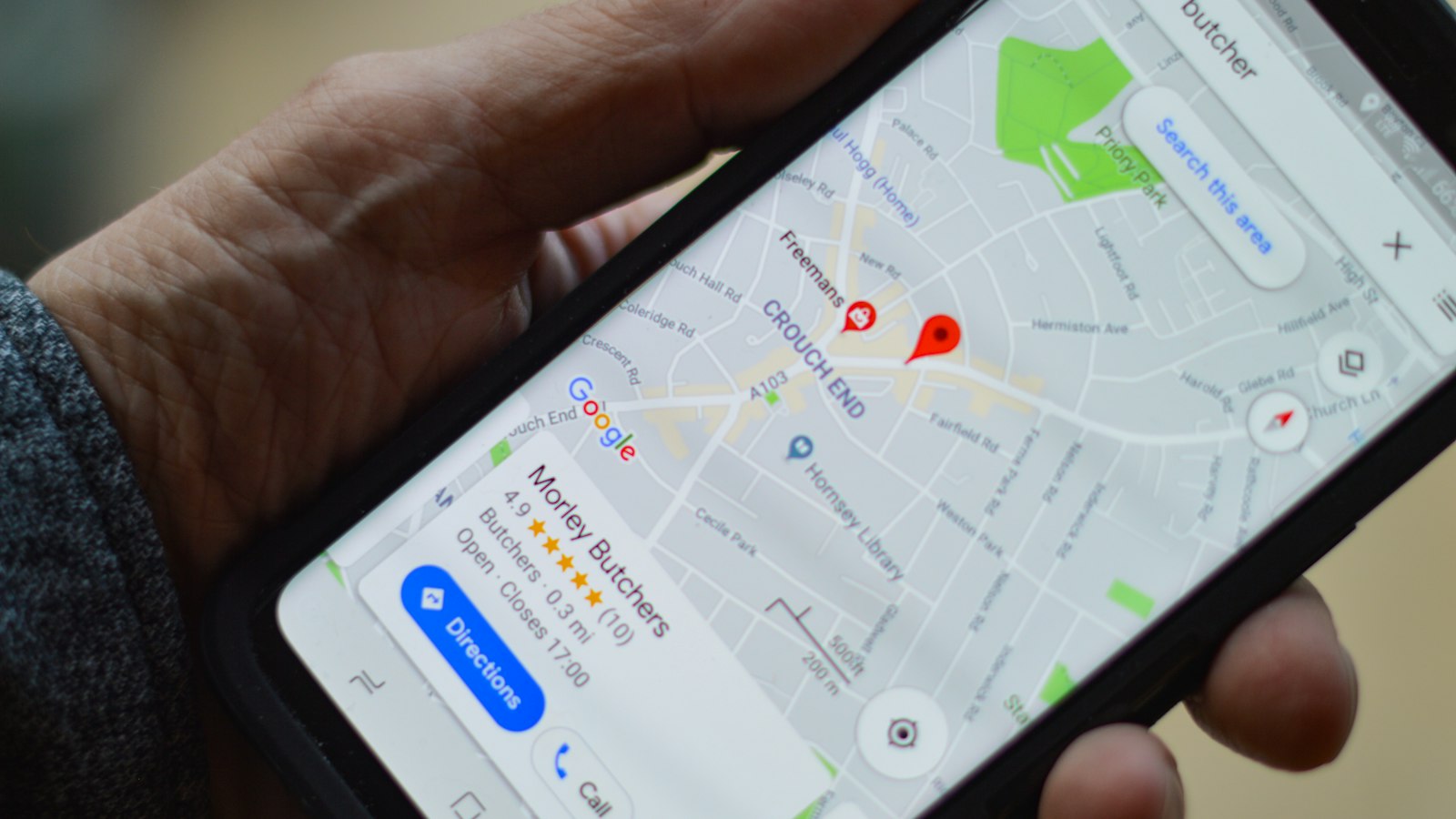
There is a particular and well-earned confidence that comes from knowing your business occupies one of the three positions beneath the map when someone within ten miles of Doylestown types your service into Google, and for the better part of fifteen years that confidence was entirely justified, because the local pack was the destination rather than a waypoint, the phone rang on Monday mornings, and the years of work that went into earning that placement repaid themselves many times over.
What has changed is not that the local pack stopped working, because it continues to work exactly as well as it ever did for the people who actually see it, but rather that an increasing proportion of searches never surface a local pack in the first place. Those searches resolve inside Google’s AI Mode, or inside an AI Overview sitting above everything else on the page, where the answer is a written recommendation naming a few specific businesses, composed by a language model that has formed a view about which providers fit the question asked.
The genuinely uncomfortable part, and the part that has prompted more than a few phone calls to our office on North Main Street over the past year, is that these two systems do not draw from the same list. A business can hold the top position in the local pack for a given query and appear nowhere whatsoever in Google’s AI Mode answer for that identical query, which means the owner’s own spot checks, performed exactly the way they have always been performed, return a reassuring result that no longer describes what a meaningful portion of the market is actually being shown.
A business can hold the number one position in the local pack and appear nowhere at all in Google’s AI answer for the very same search.
This is the mechanical explanation behind a question we now field almost weekly, usually phrased as some version of why did my business disappear from Google, asked by owners whose rankings have not moved by a single position and whose inbound call volume has nonetheless softened in a way that no seasonal pattern, no competitor opening, and no change in their own operations adequately accounts for.
Twenty-Eight And A Half
In June of 2026, a study published by Local SEO Data finally attached a defensible number to a gap that practitioners had been describing anecdotally for months. The researchers ran 1,120 query executions across seven verticals, covering plumbers, dentists, HVAC contractors, chiropractors, lawyers, restaurants, and medical specialists, distributed across thirteen American cities and collected over three days in late May, analyzing the results with bootstrap confidence intervals drawn from ten thousand resamples and corrections for multiple comparisons, a standard of rigor genuinely uncommon in marketing research.
The headline finding was that 28.5% of the businesses appearing in the Local Pack were missing entirely from AI Mode for the same query, with the overlap between the two systems falling somewhere between 69.2% and 73.8% at a ninety-five percent confidence interval. Put in the terms that matter to an owner, roughly three out of every ten businesses that Google is willing to display on its map for a search are businesses that Google’s own AI declines to mention when answering that search.
The traffic ran in both directions, which is the detail that tends to change the conversation in our conference room, because the same study identified 999 businesses that appeared exclusively in AI Mode and never once surfaced in the Local Pack, and within consumer service categories those AI-Mode-only businesses carried 49% more reviews at the median than the businesses appearing only in the Local Pack. A second and much larger analysis published by SOCi in January of 2026, covering nearly 350,000 locations across 2,751 multi-location brands, found a similarly lopsided picture:
- 35.9% of the locations studied appeared in Google’s traditional local three-pack, which is broadly the visibility rate that established local businesses have come to expect.
- 11% of those same locations were recommended by Gemini, meaning roughly two thirds of the businesses winning the map were absent from Google’s own conversational assistant.
- 7.4% were recommended by Perplexity, and only 1.2% were recommended by ChatGPT, which is the platform a growing number of professionals now open before they open a browser.
- Locations that AI systems chose to recommend carried noticeably higher average ratings, sitting between 4.1 and 4.3 stars against an average of 3.9 stars among businesses ranking well in traditional local search.
Reporting on that dataset, Search Engine Land concluded that achieving AI visibility is presently somewhere between three and thirty times harder than ranking well in conventional local search, a spread that varies by industry and by platform but that points consistently in one direction, which is that the effort required to win the map and the effort required to win the answer are not the same effort.
Two Words That Restore A Business To Existence
Buried inside the Local SEO Data findings is a result that sounds almost trivial until you consider its implications for how your customers actually behave. When the researchers ran bare category keywords such as divorce lawyer, the queries frequently returned no business listings at all inside AI Mode, producing instead a discursive explanation of what the service involves. When the researchers appended the phrase near me to those same bare keywords, business listings were restored in one hundred percent of cases, across all thirty-eight instances tested in ten separate cities.
Whitespark’s research into the prevalence of AI Overviews in local search, drawn from 540 queries across three American cities and six industries, describes the same phenomenon from the opposite angle and explains why so many owners have concluded that nothing has changed. Queries carrying explicit local intent, the ones phrased as dentist near me or plumber Doylestown PA, still produce a local pack 93% of the time and produce an AI Overview only 15% of the time, which is precisely the kind of query an owner performs when checking on themselves.
The split is not between industries or between towns; it is between the way one customer phrases a question and the way the next customer phrases it.
The picture inverts completely as soon as the customer stops naming a category and starts describing a situation. Informational queries produce an AI Overview 92% of the time and a local pack only 6% of the time, while hybrid queries, the ones that mix a question with a purchasing intention, produce an AI Overview 97% of the time and a local pack 17% of the time, with AI Overviews appearing across an average of 68% of all local business queries studied. The customer who types which dentist in Bucks County is good with anxious adults is served an entirely different product than the customer who types dentist near me, and the first kind of customer is the one whose numbers are growing.
What Arrived In March
On March 12 of 2026, Google introduced Ask Maps, a conversational layer built on Gemini and folded directly into Google Maps, allowing a person to pose an untidy, real-world question and receive an AI-composed answer rendered against a personalized map rather than a ranked list of pins. Miriam Daniel, Vice President and General Manager of Google Maps, described it at launch as a conversational experience answering complex questions a map could never answer before, and it draws on Google’s index of more than three hundred million places alongside reviews from roughly five hundred million contributors.
By August the feature had been extended to more than a hundred and fifty countries, which removes any remaining argument that this was an experiment likely to be quietly retired. The results Ask Maps produces are personalized against the individual user’s Maps history and saved locations, which means that two neighbors on the same street in Doylestown Borough, asking the identical question at the identical moment, can and frequently do receive different recommendations.
Google has not published the signals that determine which businesses Ask Maps chooses to recommend, and when the question was put to company executives at launch they declined to confirm whether paid placement would eventually be introduced into the experience. For an owner accustomed to a system whose logic was at least partially legible, where proximity and prominence and relevance could be reasoned about and worked on deliberately, this represents a meaningful shift in the terms of engagement.
The Arithmetic Of Three To Eight
In April of 2026, Rich Sanger published testing in Search Engine Land that measured how many businesses Ask Maps actually names in response to a query, and the numbers deserve attention from anyone whose livelihood depends on being one of them. Across five escalating levels of query complexity, the average number returned was 3.6 for basic searches, 4.3 for specific service requests, 3.3 for situational questions, 5 for trust-focused inquiries, and 4.6 for advisory questions, with the range falling generally between three and eight businesses.
Compare that against traditional Maps behavior, where a customer who does not immediately find what they want can keep scrolling through dozens of listings, refine a filter, widen a radius, and eventually encounter a business sitting well outside the top three. That scrolling behavior was the mechanism through which a great many perfectly good Bucks County businesses earned work despite never quite cracking the pack, and Ask Maps removes it almost entirely.
Sanger’s follow-up analysis, published in May, documented the more consequential change underneath the arithmetic, which is the movement from listings toward recommendations. At the simplest level Ask Maps still leans heavily on Google Business Profile data, though it now composes narrative summaries rather than presenting neutral fields, and as query complexity rises the system increasingly interprets which businesses fit a stated need, framing them around qualities such as responsiveness, honesty, and specialization. At the advisory end it frequently opens with an explanation and introduces a decision framework before naming any provider at all, behaving more like a consultant than a directory.
A conversational answer that names four businesses does not have a fifth position for a customer to scroll toward.
Your Reviews Are Writing Your Sales Copy Now
The single most actionable finding across all of this research, and the one we now raise in the first meeting with every client who comes to us about AI visibility, is that review language consistently determined how businesses were described inside Ask Maps answers. The adjectives your customers chose, more or less verbatim, became the adjectives Google used when introducing you to a stranger, which means that the review corpus you have spent years accumulating is no longer merely a trust signal expressed as a number of stars but is functioning as the raw material from which your public description is being written.
This changes what a review request should actually ask for, and it retires the approach most Bucks County businesses have used since roughly 2014, which was to ask politely for five stars and consider the matter closed. A review reading great service, highly recommend contributes almost nothing to a system determining whether your practice suits a patient with dental anxiety, or whether your firm is the one to call about a failing oil-to-gas conversion in a farmhouse off Route 611.
- Ask for the situation rather than the sentiment, prompting customers to describe what problem brought them in, because the language describing that problem is the language future customers will use when they ask their question.
- Ask for the specific service performed by name, since the vocabulary of your service lines needs to exist somewhere in natural human phrasing rather than only in the clipped category labels available inside your profile.
- Ask for the outcome and the timeframe, because recommendation systems weighting responsiveness and reliability need textual evidence that those qualities were actually experienced by someone.
- Ask consistently rather than in campaigns, given that freshness carries measurable weight and a review corpus that stopped growing in 2023 reads as a business whose story has ended.
- Respond to every review in language that restates the service and the situation, because your responses are part of the same corpus and are among the few pieces of that corpus you control directly.
The Pages That Answer Questions Nobody Types Into A Search Box
As query complexity increases, the weight that Ask Maps and AI Mode place on your Google Business Profile declines and the weight they place on your website rises, which inverts a decade of received wisdom that local businesses should pour attention into the profile and treat the website as a brochure. The pages that earn citations in these systems are the ones Sanger describes as jobs-to-be-done pages, meaning pages that walk through the way a customer arrives at a decision, covering how the problem first announces itself, what the realistic options are, what each option costs in money and disruption, and what a reasonable person should expect afterward.
Analysis by Omniscient Digital across more than twenty-three thousand citations found that owned content accounted for roughly 23% of the citations appearing on branded queries, with the remaining 77% drawn from external sources, which establishes both halves of the assignment fairly clearly. Your own pages need to exist and need to say something substantive, and they are nonetheless insufficient on their own, because these systems corroborate what you claim about yourself against what other places on the internet say about you before they will repeat it to a customer.
Freshness is measurable rather than theoretical here, with Ahrefs finding across seventeen million AI citations that cited content averaged 25.7% fresher than content ranking through conventional means, and platform concentration is pronounced, with research from Averi.ai attributing 21% of AI Overview citations to Reddit and 18.8% to YouTube. A business never discussed in a regional subreddit, never mentioned in a local news item, and never described on any page it does not itself own, is asking a corroboration engine to take its word for something.
- Service pages written around the customer’s problem rather than around your internal service taxonomy, since the query is a description of a situation and not a request for a category.
- Genuine answers to the questions people ask on the phone before they book, published in the same plain language in which they were asked.
- Consistent identity across your website, your profile, your reviews, and every external directory, because contradiction between sources is read as uncertainty and uncertainty is resolved by omitting you.
The Report You Have Been Reading Is The Wrong Report
Almost every local business we speak with is measuring its visibility through some combination of Google Business Profile insights, a rank tracker reporting map positions, and the owner’s own habit of searching their category from their phone while sitting in their own parking lot. Each of these instruments measures the local pack, each will continue reporting healthy numbers while the AI layer quietly routes customers elsewhere, and the parking lot search is the least reliable of the three, because a phone that has visited your website hundreds of times, sitting at your own address, is about as close to a rigged test as local search permits.
Measuring AI visibility honestly is harder, and any agency promising a clean weekly number is describing something that does not presently exist, since Whitespark’s own guidance acknowledges that precise tracking remains impractical given how heavily results are personalized. The tractable approach is to sample deliberately and repeatedly, running the situational and advisory phrasings your customers actually use, from clean sessions, across the towns you genuinely serve, and recording who gets named rather than where you rank.
What that sampling produces is not a score but a competitive map, showing which three or four businesses in your category Google has decided to trust for each kind of question, what language it uses to describe them, and which of your competitors is being characterized in the terms you assumed belonged to you. That document, in our experience, tends to end the debate about whether any of this is real considerably faster than any statistic we could quote.
What This Looks Like From North Main Street
Bucks County presents a specific version of this problem that owners here feel before they can name it. The searching population is distributed across Doylestown, New Hope, Newtown, Buckingham, Chalfont, Warrington, and the stretch of commerce running along Route 202 and Route 611, and a great many of the people who become customers are searching from Montgomery County, from the far side of the river in Hunterdon, or from a car somewhere between Lahaska and the Turnpike interchange. The local pack handled that geography through proximity, which is why a business with a Doylestown address and disciplined local SEO could reliably own the borough and capture a wide ring around it.
AI Mode does not treat geography as a radius in the same way, because it is answering a question rather than sorting a map, and a query such as which firm in Bucks County actually handles historic properties will be resolved on the strength of the evidence available about who handles historic properties, wherever that evidence happens to live. For a Doylestown business, this cuts in both directions at once, exposing you to competitors in Newtown and Warrington who never previously reached your customers, while simultaneously opening markets that your address alone would never have won.
We work from 152 N Main Street, a few doors from the businesses we are describing, and the pattern we see repeatedly is that the owners who are most exposed are the ones whose local SEO was most successful, precisely because a decade of reliable performance from the map pack removed any reason to look at anything else. The practices, contractors, restaurants, and professional firms that built their reputations here already have the raw material these systems reward, and what is missing is almost never the substance and almost always the record of it in a form a language model can find, read, and corroborate.
That is the work we do, and we would rather do it for you in the next two quarters than explain in 2028 why a competitor who was never as good at any of this became the name that Google says out loud.
Questions We Get Asked About This
Sources
- Local SEO Data Study: 28.5% of Local Pack Businesses Are Invisible in Google AI Mode
- Search Engine Land: AI local visibility is up to 30x harder than ranking in Google
- Whitespark: New Research on the Prevalence of AI Overviews in Local Search
- Search Engine Journal: Google Maps Launches AI Conversational Search With Ask Maps
- Search Engine Land: Google Ask Maps is moving from listings to recommendations
- Search Engine Land: Google Ask Maps, how to optimize for visibility
- Whitespark’s Guide to Google AI Mode for Local Businesses
More From Main Street Creative
Find Out What Bucks County Sees When It Asks About You
Main Street Creative works from 152 N Main Street in Doylestown, and we will run your real customer questions through AI Mode, AI Overviews, and Ask Maps, then show you exactly which businesses Google is naming in your category and what it would take for that name to be yours; call us at 215-206-3657.